Options
Options cheatsheet
Options Greeks Cheat Sheet
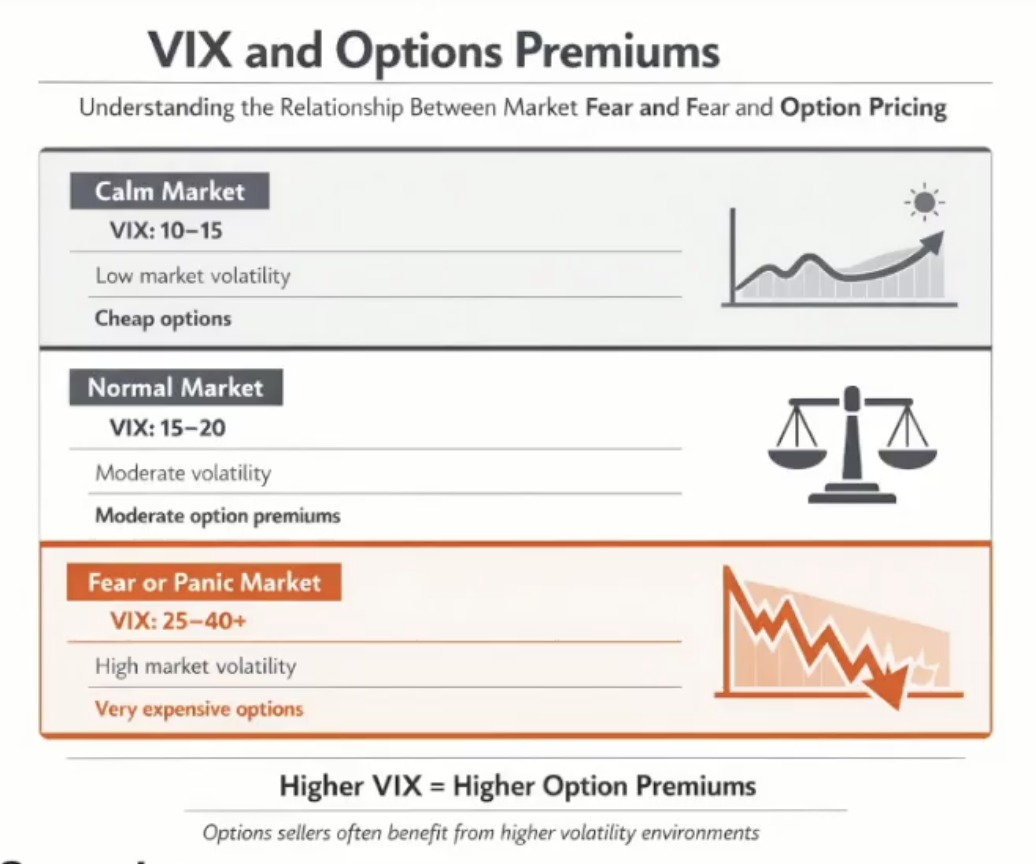
Implied Volatility (IV)
What it is: The market's expectation of how much the stock price will move over the next year, expressed as a percentage.
| Value | What it means |
|---|---|
| 0–20% | Low volatility — stock expected to be calm |
| 20–50% | Normal range for most stocks |
| 50–80% | High volatility — big moves expected |
| 80%+ | Extreme volatility — options are expensive |
Your WD put: IV = 93% → Market expects massive swings. Options are pricey.
Delta (Δ)
What it is: How much the option's price moves when the stock moves $1.
| Value | What it means |
|---|---|
| 0.00 to +1.00 | Calls — rises when stock rises |
| 0.00 to −1.00 | Puts — falls when stock rises |
| ±0.50 | Roughly 50/50 chance of expiring in the money |
| ±0.80–1.00 | Deep in the money — moves almost like the stock |
| ±0.01–0.10 | Far out of the money — very unlikely to profit |
Your WD put: Delta = −0.0805 → For every $1 WD rises, your put loses ~$0.08. For every $1 WD falls, your put gains ~$0.08.
Gamma (Γ)
What it is: How much delta itself changes when the stock moves $1. Think of it as delta's sensitivity.
| Value | What it means |
|---|---|
| High (0.05+) | Delta changes rapidly — option is very sensitive to price moves |
| Low (0.001–0.005) | Delta barely changes with price moves |
| Near expiration | Gamma spikes dramatically |
Your WD put: Gamma = 0.0002 → If WD drops $1, delta moves from −0.0805 to about −0.0807. Very small — you're far out of the money.
Theta (Θ)
What it is: How much value the option loses each day just from time passing, assuming the stock price stays flat. Always negative for buyers.
| Value | What it means |
|---|---|
| −0.01 to −0.05 | Slow decay — often far from expiration |
| −0.05 to −0.20 | Moderate decay |
| −0.20+ | Fast decay — usually near expiration or high IV |
Your WD put: Theta = −0.1049 → You lose ~$10.49 per day (×100 shares per contract) just from time passing. Over 30 days = ~$314 lost to time decay alone.
Vega (ν)
What it is: How much the option's price changes when IV moves 1%.
| Value | What it means |
|---|---|
| High (0.50+) | Very sensitive to volatility changes |
| Low (0.01–0.10) | Less affected by volatility shifts |
| Long options | You benefit when IV rises |
| Short options | You benefit when IV falls |
Example: If your option has a Vega of 0.30 and IV jumps from 93% to 94%, the option gains $0.30 in value (×100 = $30 per contract).
Rho (ρ)
What it is: How much the option's price changes when interest rates move 1%. Usually the least important Greek for short-term traders.
| Value | What it means |
|---|---|
| Positive (calls) | Rising rates slightly increase call value |
| Negative (puts) | Rising rates slightly decrease put value |
| Near zero | Short-dated options barely affected |
Quick Reference: Your WD Put ($300 Strike, Jan 2028)
| Greek | Your Value | Plain English |
|---|---|---|
| IV | 93% | Market expects huge moves — option is expensive |
| Delta | −0.0805 | Gains ~$8 per contract for every $1 WD falls |
| Gamma | 0.0002 | Delta barely changes — you're far out of the money |
| Theta | −0.1049 | Loses ~$10.49/day per contract from time alone |
| Contract cost | $6,200 | $62 quote × 100 shares |
Key Concepts to Remember
- One contract = 100 shares. Always multiply the quoted price by 100 to get your actual cost.
- Out of the money (OTM): The stock price hasn't reached your strike yet. For puts, this means the stock is above your strike price.
- In the money (ITM): Your option has intrinsic value. For puts, this means the stock is below your strike.
- Time decay accelerates as expiration approaches — the last 30 days are the fastest decay period.
- IV crush: After major news events (earnings, etc.), IV often drops sharply, taking option prices with it even if the stock moves in your favour.
Terms
CoCH (Cash on cash return)
CoCR shows the actual return a trade generated on the cash you had on the line (risked)
CoCR = Return / Capital required x 100
EG: $150 (return) / $5,000 (capital required) = 3.0% (CoCR)

Trading strat
TP at 70%
SL at 150-200% of premium received
apply the 21 day rule
Andy strat
target 3% per month
wheel strategy
delta around 0.3
position size under 10%
Delta selection
0.10 Delta = Lower premium, higher probability
0.30 Delta = Balance approach
0.50 Delta = Higher premium, higher risk
Stop loss
Write an option for $1
Stop loss at $1.5-$2
Take profit
Buy same option you wrote but at a cheaper price
60 seconds to fire resources
if you sell a CSP at 10, get assigned but the stock drops to 5, would you wait for it to get back above 10 before selling CCs
Defintions
Options Greeks Cheat Sheet
All examples below use BHP: current price $83.33, put strike $80, option price $1.15, 15 days to expiry.
Implied Volatility (IV)
What it is: The market's expectation of how much the stock price will move over the next year, expressed as a percentage.
| Value | What it means |
|---|---|
| 0–20% | Low volatility — stock expected to be calm |
| 20–50% | Normal range for most stocks |
| 50–80% | High volatility — big moves expected |
| 80%+ | Extreme volatility — options are expensive |
Your BHP put: IV ≈ 24% → Fairly normal volatility for a large ASX stock like BHP.
Delta (Δ)
What it is: How much the option's price moves when the stock moves $1.
| Value | What it means |
|---|---|
| 0.00 to +1.00 | Calls — rises when stock rises |
| 0.00 to −1.00 | Puts — falls when stock rises |
| ±0.50 | Roughly 50/50 chance of expiring in the money |
| ±0.80–1.00 | Deep in the money — moves almost like the stock |
| ±0.01–0.10 | Far out of the money — very unlikely to profit |
Your BHP put: Delta ≈ −0.20 → For every $1 BHP rises, this put loses ~$0.20. For every $1 BHP falls, it gains ~$0.20. Also read as roughly a 20% chance of expiring in the money.
Gamma (Γ)
What it is: How much delta itself changes when the stock moves $1. Think of it as delta's sensitivity.
| Value | What it means |
|---|---|
| High (0.05+) | Delta changes rapidly — option is very sensitive to price moves |
| Low (0.001–0.005) | Delta barely changes with price moves |
| Near expiration | Gamma spikes dramatically |
Your BHP put: Gamma ≈ 0.07 → If BHP drops $1, delta moves from about −0.20 to roughly −0.27. Meaningful, because this put is only 15 days out and close to the strike.
Theta (Θ)
What it is: How much value the option loses each day just from time passing, assuming the stock price stays flat. Always negative for buyers.
| Value | What it means |
|---|---|
| −0.01 to −0.05 | Slow decay — often far from expiration |
| −0.05 to −0.20 | Moderate decay |
| −0.20+ | Fast decay — usually near expiration or high IV |
Your BHP put: Theta ≈ −0.04 → Loses about four cents per day (×100 shares per contract) just from time passing. As a seller, this works for you — every day BHP stays above $80, the option you sold decays toward zero.
Vega (ν)
What it is: How much the option's price changes when IV moves 1%.
| Value | What it means |
|---|---|
| High (0.50+) | Very sensitive to volatility changes |
| Low (0.01–0.10) | Less affected by volatility shifts |
| Long options | You benefit when IV rises |
| Short options | You benefit when IV falls |
Example: If your BHP put has a Vega of 0.05 and IV jumps from 24% to 28%, the option gains roughly $0.20 in value (×100 = $20 per contract) — bad news if you're short the put.
Rho (ρ)
What it is: How much the option's price changes when interest rates move 1%. Usually the least important Greek for short-term traders.
| Value | What it means |
|---|---|
| Positive (calls) | Rising rates slightly increase call value |
| Negative (puts) | Rising rates slightly decrease put value |
| Near zero | Short-dated options barely affected |
With only 15 days to expiry, Rho has almost no practical effect on your BHP put.
Delta as a Probability Estimate
Delta is commonly used as a rough estimate of the probability an option expires in the money. It's not mathematically exact (the true theoretical probability is a related figure called N(d2)), but it's close enough that most traders use it this way in practice.
| Delta | Rough probability of expiring ITM |
|---|---|
| ±0.10 | ~10% chance |
| ±0.25 | ~25% chance |
| ±0.50 | ~50% chance (coin flip) |
| ±0.80 | ~80% chance |
Traders often pick strikes by targeting a delta — e.g. selling puts around 0.20–0.30 delta (like your BHP $80 put) to aim for roughly a 70–80% chance of keeping the full premium.
Buying vs. Selling Options — Risk Profile
| Buying (long) | Selling (short/writing) | |
|---|---|---|
| Max loss | Limited to premium paid | Can be very large (naked calls: unlimited; naked/cash-secured puts: strike price × 100) |
| Max gain | Can be large/unlimited (calls) | Limited to premium collected |
| Time decay (theta) | Works against you | Works for you |
| Why WSB accounts blow up | Rarely from buying alone | Usually from selling naked options with leverage, then getting caught by a big move |
Income Strategies
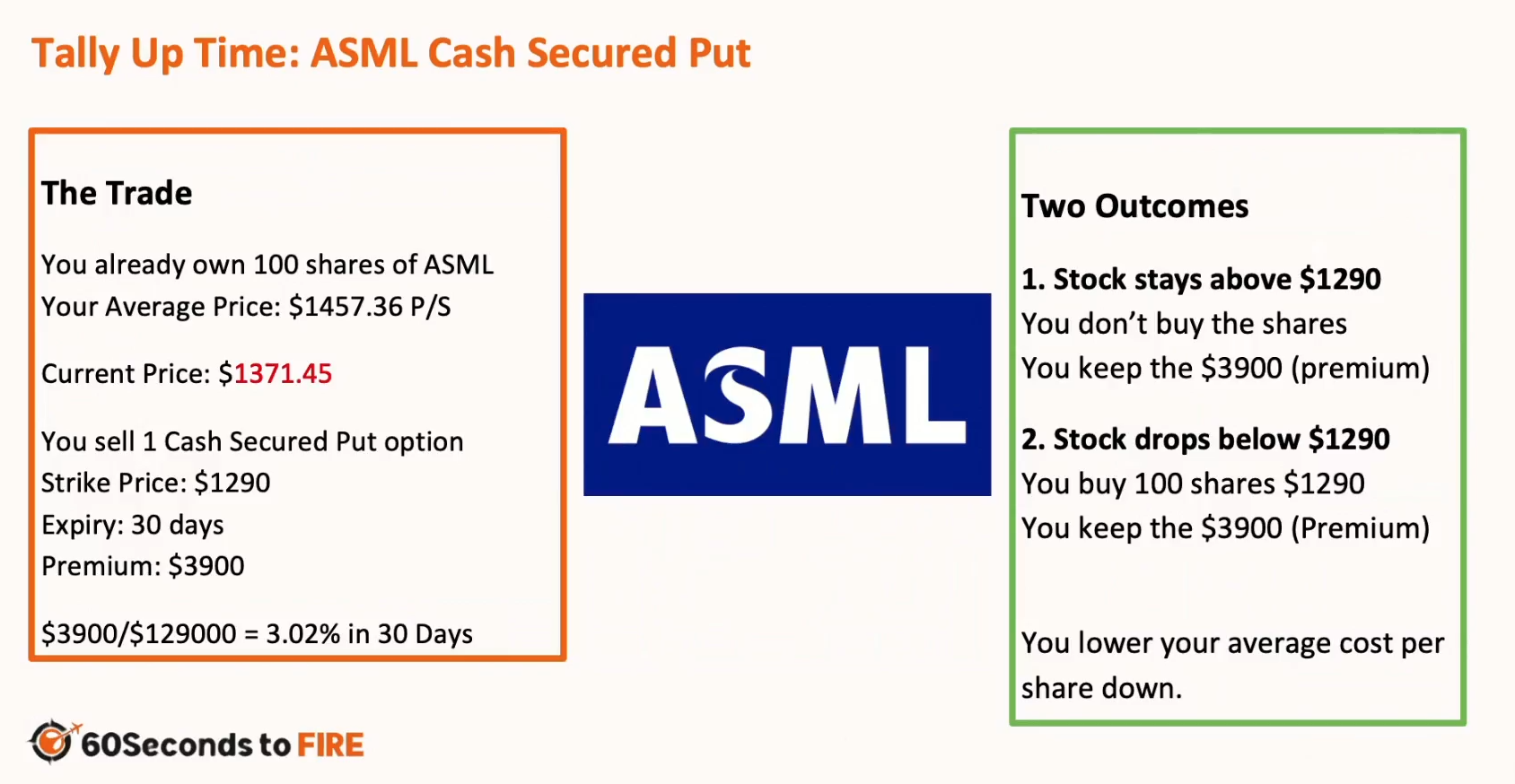
Cash secured put: Sell a put and set aside cash equal to strike × 100. Keep the premium regardless. If assigned, you buy 100 shares at the strike price — often used on stocks you're happy to own anyway, effectively lowering your cost basis by the premium received.
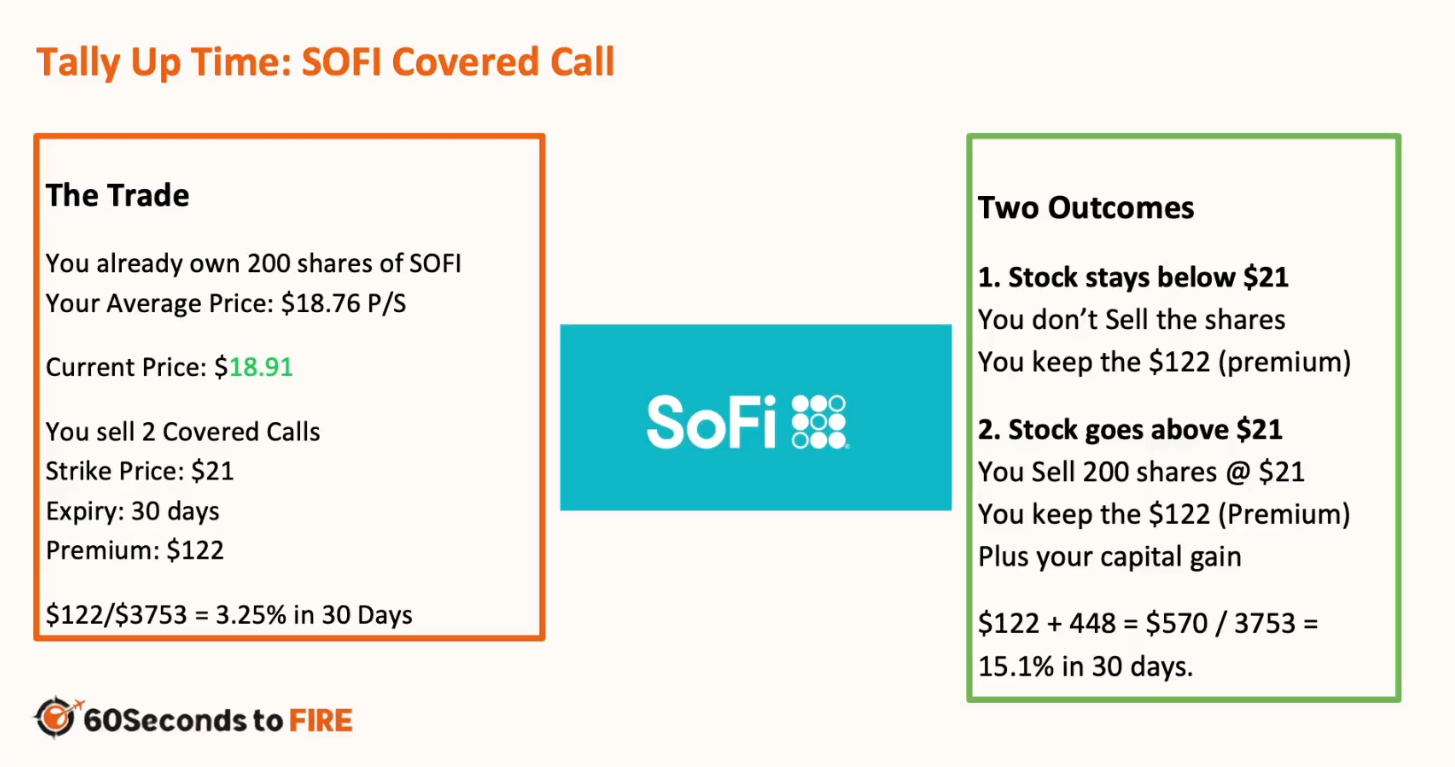
Covered call (stock secured call): Own 100 shares, sell a call against them. Keep the premium regardless. If assigned, you sell your shares at the strike — a way to generate income from stock you already hold.
The wheel strategy: Sell cash secured puts to acquire shares you want; once assigned, sell covered calls against those shares to generate ongoing income; if called away, go back to selling puts. A cyclical income strategy combining both.
Important nuance: If you get assigned on a cash secured put and plan to hold long-term, this isn't a realized loss — you've simply bought shares at (strike − premium), even if the market price is temporarily lower. It only becomes a real cash loss if you close the option itself at a worse price than you sold it for (e.g. via a stop loss).
Stop Loss & Take Profit on Options
These trigger a buy-back (if you're short) or a sell (if you're long) at a set option price, not the stock price.
If you sold (short) an option:
- Option price rising = bad for you (stock moving against your position)
- Set stop loss above your entry price (e.g. sold at $1.15 → stop loss at $2.15) to cap losses
- Set take profit below your entry price (e.g. take profit at $0.50) to lock in gains
- P&L formula: (entry price − exit price) × 100 per contract
If you bought (long) an option:
- Option price falling = bad for you
- Set stop loss below entry price
- Set take profit above entry price
Example: Sell BHP put at $1.15, stop loss at $2.15. If triggered, you buy back at $2.15 having only received $1.15 — that's a real cash loss of $100 per contract, not a discount. This is different from being assigned shares at expiration, which is a stock purchase, not a cash loss (assuming you're happy to hold the shares).
Open Interest
The total number of contracts of a specific strike/expiry currently open (not yet closed, exercised, or expired) — different from volume, which is how many traded today.
- New contract created (both sides opening) → open interest +1
- Existing position closed (either side) → open interest −1
- One trader takes over another's existing position → open interest unchanged, volume still rises
Why it matters: Higher open interest generally means tighter spreads and easier entry/exit. Low open interest — common on many ASX options strikes, especially further OTM ones — often means wide spreads and harder fills. It's also watched as a sentiment/positioning indicator, especially around major expiries.
Trading Options on the ASX
- ASX-listed options trade through ASX Trade, cleared via ASX Clear — you never deal directly with your counterparty
- Requires a broker and a signed Client Agreement before trading options
- ASX options generally have much lower liquidity than US options — wider spreads, fewer strikes/expiries available
- Common brokers: Interactive Brokers (lowest fees, broadest access to both ASX and international options), CMC Markets, IG Australia
Quick Reference: Your BHP Put ($80 Strike, 15 Days to Expiry)
| Greek | Approx. Value | Plain English |
|---|---|---|
| IV | ~24% | Normal volatility for BHP |
| Delta | ~−0.20 | Gains ~$20 per contract for every $1 BHP falls; roughly 20% chance of finishing ITM |
| Gamma | ~0.07 | Delta shifts noticeably as BHP moves — this put is close to the strike |
| Theta | ~−0.04 | Loses ~$4/day per contract from time alone (works in your favour as the seller) |
| Contract credit | $115 | $1.15 quote × 100 shares |
Key Concepts to Remember
- One contract = 100 shares. Always multiply the quoted price by 100 to get your actual cost (or credit received).
- Out of the money (OTM): The stock price hasn't reached your strike yet. For puts, this means the stock is above your strike price.
- In the money (ITM): Your option has intrinsic value. For puts, this means the stock is below your strike.
- Time decay accelerates as expiration approaches — the last 30 days are the fastest decay period.
- IV crush: After major news events (earnings, etc.), IV often drops sharply, taking option prices with it even if the stock moves in your favour.
- Assignment ≠ automatic loss. Being assigned shares on a cash secured put just means buying stock at (strike − premium). It's only a realized cash loss if you close the option position itself at a worse price than you opened it.
Worked Example: BHP Cash Secured Put
Stock price: $83.33 | Strike: $80 | Expiry: 15 days | Option price: $1.15 (sell to open)
| Scenario | What happens |
|---|---|
| Option price decreases | Good for you — stock staying above $80, option losing value toward zero |
| Option price increases | Bad for you — stock falling toward/below $80, higher chance of assignment |
| Stop loss at $2.15 hit | You buy back at $2.15 vs. sold at $1.15 → real loss of $100/contract |
| Held to expiry, assigned at $80 | You buy 100 shares at $80, keep the $1.15 premium → effective cost basis ≈ $78.85/share |
| Assigned but happy to hold long-term | Not a realized loss — you own shares you wanted, at a discount from the premium |